
The Guardian view on Narendra Modi’s gen Z crackdown: he cannot arrest his way out of a democratic crisis | Editorial
 adminUpdated 50 minutes Ago2 Mins read
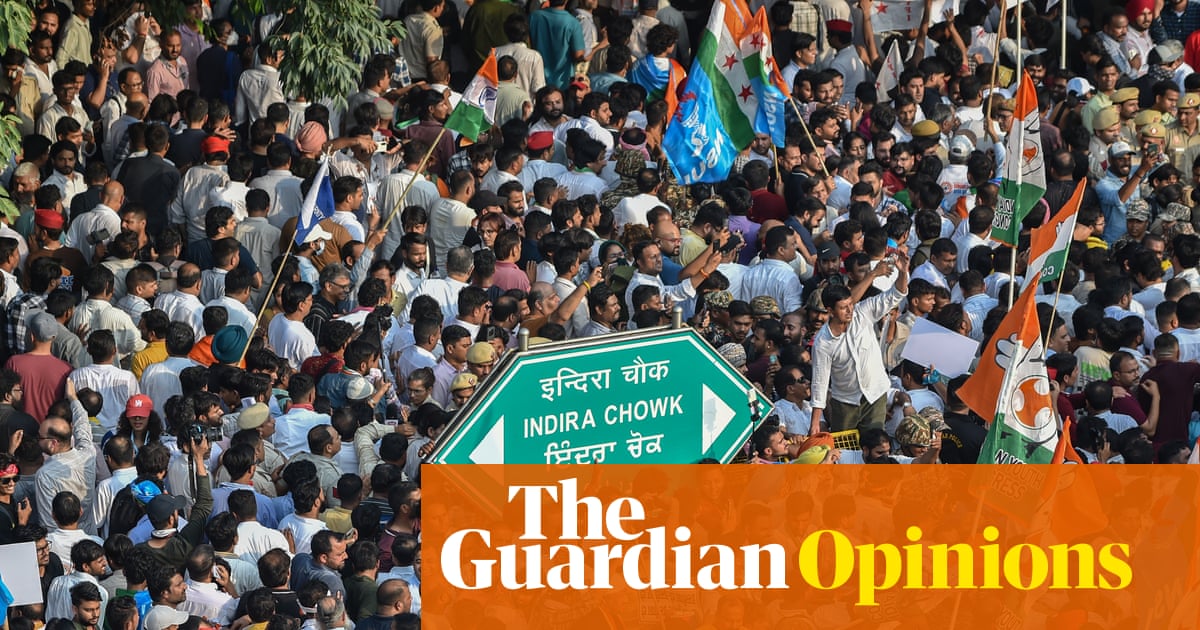
Narendra Modi’s heavy-handed crackdown on protests over electoral rights in Delhi appears to have backfired. Over the weekend, his government tried to crush demonstrations led by the gen Z Cockroach Janta party (CJP). It locked up thousands of young people, detained journalists and shut down the capital as if he had declared emergency rule. Abhijeet Dipke, who launched the CJP in May after India’s chief justice compared jobless youths to “cockroaches”, was detained with other leaders when he landed in Delhi. Those who did take to the Indian capital’s streets were roughed up by police or taken into custody. Even when the usually deferential supreme court ordered peaceful assembly be protected, Mr Modi’s government showed its authoritarian contempt for fundamental constitutional rights.
This was less a display of strength than a government showing its fear of voters it claims to represent. But the actions did not stop the protests. On Monday, thousands marched in Delhi, demanding the resignation of India’s election chief over reports that the names of more than 130 million voters were deleted from the electoral roll to benefit Mr Modi’s Bharatiya Janata party (BJP) in recent elections. It’s a charge that India’s election commission denies, although some commissioners have raised concerns over voters’ names being removed without their knowledge.
Demonstrators’ demands for electoral fairness deserve answers, not arrests and intimidation. The BJP won state elections in West Bengal, where Muslims make up roughly 27% of the 100m population, for the first time ever after 2.7 million voters had been officially struck off the rolls. In many seats won by the BJP, the number of deleted or disputed voters exceeded the margin of victory. The courts said that the missing voters could cast their ballots next time.
Mass voter deletions and a brutal crackdown are fuelling distrust. Daily protests by student organisations, political parties and the Cockroach movement have been taking place in the capital for weeks. The world’s largest democracy ought to be protecting constitutional rights and finding responses to its critics. A crisis is growing because of repeated cycles of government failure, official denial and resistance to accountability. The Cockroach movement was born of anger over indifference to exam leaks that benefit connected insiders. It has become the voice of educated young Indians trapped by jobless growth, poor education and insecure work. Clearly, many are now challenging a government that they say denies them opportunity and accountability. Repression risks hardening their frustration into wider resistance.
This latest episode reveals that Mr Modi has significantly weakened the public’s faith in independent institutions like the election commission and the courts. That may be by design. It’s hard not to think that India’s prime minster bets he can survive the public’s anger as long as the protesters cannot turn it into leverage over his government – and the institutions meant to hold power accountable refuse to act. But what happens when the state makes correcting mistakes impossible? Without a democratic release, the ire builds up to a potentially volatile confrontation.
There is still reason for hope in India. The Indian Express newspaper revealed officials had raised objections to scrubbing voter lists. The resulting political mobilisation has raised the cost of ignoring such dissent. Mr Modi can’t wave this issue away. In 2011, corruption scandals became evidence that the Congress-led government had lost its moral authority. Mr Modi rode the wave of public disgust into power three years later. Now, allegations about electoral rolls could unite people around the belief that Mr Modi has betrayed them. Silencing young people with martial law-like tactics only helps to dramatise the grievance.






Leave a comment